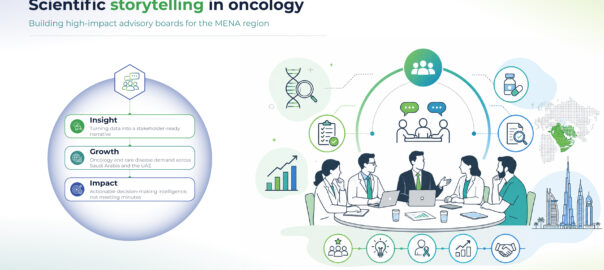
What is an Advisory Board?
An advisory board is a strategic, invitation-only meeting convened by pharmaceutical, biotechnology, and medical device companies to seek expert guidance from external key opinion leaders (KOLs), healthcare professionals (HCPs), and clinical researchers. Oncology advisory boards, in particular, play a major role in optimizing treatment strategies and addressing emerging clinical challenges in cancer care.
Unlike promotional symposia or commercial sales meetings, advisory boards are strictly scientific and consultative. They are designed to foster a two-way dialogue between industry leaders and clinical experts.
Core Objectives of an Advisory Board
- Gather strategic insights: Obtain real-world perspectives on clinical trial designs, evolving treatment paradigms, unmet medical needs, and patient journey bottlenecks.
- Validate clinical data: Test hypotheses, review emerging data (such as phase trial results or postmarketing studies), and gauge how new therapies fit into everyday clinical practice.
- Shape educational initiatives: Understand regional clinical preferences to guide the development of continuing medical education (CME) programs, consensus statements, and medical communications.
- Inform market access: Evaluate health economics, reimbursement challenges, and local regulatory hurdles (particularly in dynamic markets like the MENA region).
Why Are Advisory Boards Essential?
The increasing burden of chronic diseases, including cancer and rare diseases, together with advances in therapeutic strategies, emphasize the need for close collaboration between the pharmaceutical industry and HCPs to translate scientific innovation into improved patient outcomes. Advisory boards play a critical role in facilitating this collaboration by providing a forum for expert discussions on best practices, emerging evidence, clinical trial data, and real-world experience, supporting the successful introduction and optimal use of new oncology medicines.
Oncology advisory boards differ significantly from advisory boards of other diseases due to the inherent complexity of cancer, the rapidly advancing diagnostic and treatment landscape, and the need to continuously evaluate the real-world efficacy and safety profiles of emerging therapies. In the MENA region, these advisory boards facilitate the addressing of local evidence gaps, the alignment of treatment strategies with the genetic and demographic characteristics of the population, and increased access to innovative therapies.
The New Frontier of Oncology in MENA
The MENA region, led by the UAE and Saudi Arabia, has rapidly evolved into a global powerhouse for healthcare innovation and recurrent pharmaceutical business, with oncology and rare diseases taking center stage. However, traditional advisory boards in this region frequently fall into the trap of “logistics-first” planning, prioritizing venues and travel over deep scientific engagement.
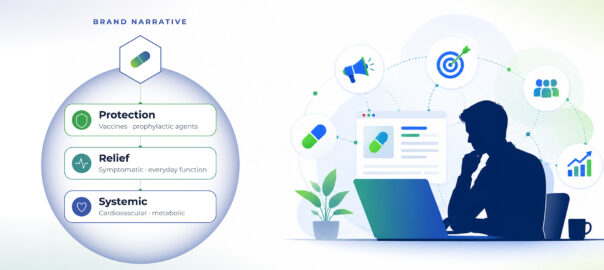
To break through this noise, medical affairs teams must introduce scientific storytelling as the critical bridge between raw clinical data and stakeholder engagement. By transforming complex data into a cohesive, objective-driven narrative, scientific storytelling helps navigate the unique cultural and regulatory landscapes of the UAE and Saudi Arabia, ultimately generating actionable decision-making intelligence.
Strategy, Insight, and Impact
1. How does scientific storytelling improve oncologist engagement in MENA?
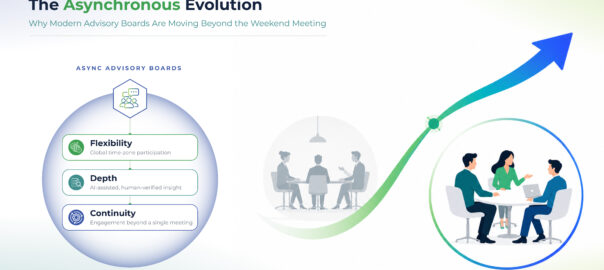
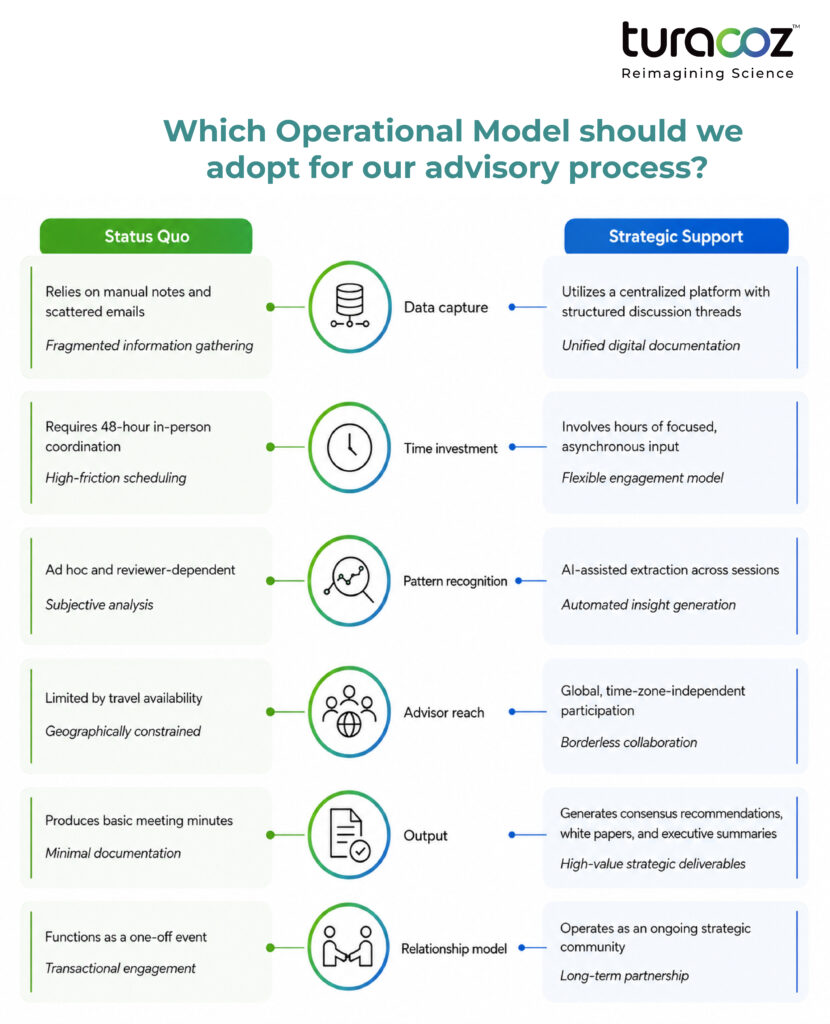
Traditional advisory boards often suffer from ill-defined objectives and poor KOL engagement due to cluttered data presentation and a lack of narrative coherence. This hinders the generation of actionable items or clear clinical conclusions. While virtual advisory boards mitigate scheduling and travel barriers, they often lack the depth of in-person interactions.
Scientific storytelling overcomes these hurdles by shifting the discussion from a purely data-driven format to an objective-driven framework. By emphasizing the underlying clinical rationale rather than isolated data points, it enables HCPs to better understand complex challenges and formulate real-world solutions. In culturally and linguistically diverse regions such as MENA, this approach bridges evidence gaps and leverages varied KOL perspectives to drive strategic insight.
2. What are the latest oncology stakeholder engagement trends in Saudi Arabia and UAE?
Saudi Arabia and the UAE are spearheading rapid growth in the region’s drug development market, driven by the burden of lifestyle-related cancer and enhanced diagnostic capabilities. Growing investments in oncology research and expanding healthcare infrastructure have accelerated the adoption of innovative treatments, including targeted therapies and immunotherapies. Recent IQVIA data underscores this momentum: of 183 global cancer drug launches, 53% were approved in Germany, followed by 31% in both Saudi Arabia and the UAE, with the UAE achieving some of the fastest time-to-availability metrics.
Beyond oncology, rare diseases represent another critical priority for the MENA region due to a high prevalence of inherited disorders linked to factors such as high consanguinity rates. In response, governments across the Middle East are prioritizing rare disease pathways through dedicated funding and streamlined regulatory frameworks.
3. How can advisory boards provide actionable intelligence beyond meeting minutes?
Advisory boards can generate far greater value than a simple record of discussions when insights shared by KOLs are systematically analyzed and translated into strategic, evidence-based deliverables. Turacoz transforms advisory board discussions into high-value strategic deliverables:
- Scientific facilitation and documentation: Driving focused engagement with KOLs while meticulously capturing discussion points.
- Structured meeting reports: Systematically synthesizing raw notes into comprehensive overviews of objectives, evidence reviewed, expert consensus, and action items.
- Executive summaries: Condensing meeting context, key insights, risks, and recommended next steps for leadership.
- White paper development: Translating board outcomes into scientifically robust papers integrating published evidence and real-world data to support clinical policy.
- Newsletter development: Preparing concise, stakeholder-focused updates to communicate clinical trial findings and evolving consensus
Partnering for Strategic Excellence in MENA
The rapid growth in the oncology and rare disease sector has created a sustained demand for evidence-based communication, scientific platforms, and stakeholder engagement solutions, all of which Turacoz has consistently delivered. Turacoz has successfully collaborated with several leading pharmaceutical companies across the MENA region to conduct advisory boards in oncology (non-small cell lung cancer) and rare diseases (sickle cell disease). The consistent quality of these deliverables reinforces confidence in Turacoz’s scientific integrity and long-term commitment to the region.
At Turacoz, we understand that impactful KOL engagement depends on meticulous planning and seamless execution. Accordingly, we link discussion points to external evidence, translating complex conversations into clear, actionable narratives that directly support informed decision-making.
Elevate your MENA oncology strategy. Partner with Turacoz to turn your next advisory board into a hub of actionable intelligence and drive sustainable product growth.
Author:

Dr Sucharita Das
Senior Medical Writer
Medical Services, Turacoz Healthcare Solutions
About the author:
Dr. Sucharita is a Senior Medical Writer at Turacoz Healthcare Solutions with more than two years of experience in developing advisory board deliverables, drafting consensus manuscripts, and creating web-based encyclopedia content. She has hands-on experience supporting projects across the European and Middle Eastern markets, contributing to the development of high-quality, evidence-based scientific communications customized to regional healthcare needs.